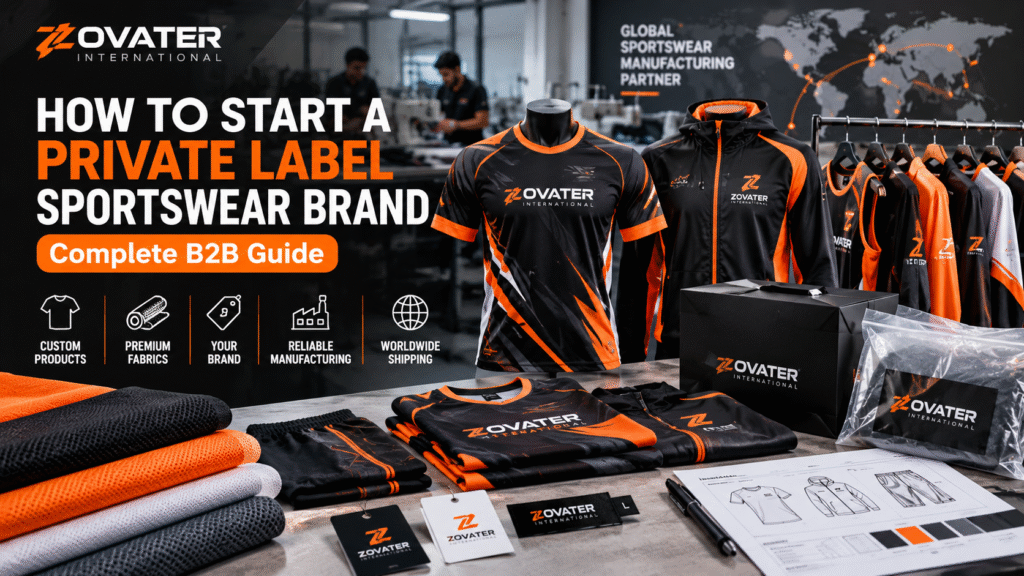
Starting a private label sportswear brand is an exciting opportunity for entrepreneurs, clothing businesses, fitness brands, and sportswear startups looking to build their own identity in the competitive apparel market.
Private label sportswear allows businesses to sell customized athletic clothing under their own brand name. From custom jerseys and gym wear to tracksuits, leggings, and performance apparel, brands can develop unique collections with their preferred fabrics, colors, logos, labels, and packaging.
However, building a successful sportswear brand requires careful planning, reliable manufacturing partners, quality materials, and an effective business strategy.
In this complete B2B guide, we will explain how to start a private label sportswear brand, select the right products, find a reliable sportswear manufacturer, understand minimum order quantities (MOQs), and prepare for bulk production.
Step 1: Identify Your Target Market and Sportswear Niche
Before launching a private label sportswear brand, it is important to identify your target customers and choose a specific sportswear niche. A clear target market helps you select suitable products, develop effective designs, and build a stronger brand identity.
Choose Your Target Audience: Decide whether you want to sell to fitness enthusiasts, sports teams, gym owners, athletes, clothing retailers, or wholesale distributors.
Select Your Product Niche: Popular private label sportswear categories include gym wear, compression clothing, custom team jerseys, training tracksuits, leggings, athletic shorts, and performance apparel.
Research Your Competitors: Study existing sportswear brands to understand their product ranges, pricing, designs, customer reviews, and market positioning.
Define Your Brand Identity: Choose your brand name, logo, color palette, product quality standards, and unique selling proposition.
Starting with a focused product category can help reduce unnecessary inventory costs and make it easier to test customer demand before expanding your sportswear collection.
Step 2: Choose the Right Products for Your Private Label Sportswear Brand
Selecting the right products is an important step when starting a private label sportswear business. Your initial collection should match your target audience, brand positioning, and available budget.
Gym & Fitness Wear: Performance T-shirts, compression shirts, leggings, sports shorts, tank tops, and training apparel are popular options for fitness-focused brands.
Custom Teamwear: Football jerseys, basketball uniforms, soccer kits, cricket apparel, and other team uniforms are suitable for sports clubs, academies, and teamwear businesses.
Athleisure & Casual Sportswear: Hoodies, joggers, tracksuits, sweatshirts, and lightweight jackets can help brands serve customers looking for both comfort and everyday style.
Performance Apparel: Cycling jerseys, running shirts, training tops, and moisture-wicking sportswear are designed for customers who prioritize functionality and athletic performance.
Start With a Small Collection: Instead of launching too many styles at once, consider selecting three to five core products. Test samples, customer feedback, and demand before expanding your range.
When finalizing your collection, consider fabric composition, GSM, size ranges, color options, branding methods, and manufacturing requirements. A clear product plan helps simplify sampling, pricing, and bulk production.
Related Guide: Learn how to design custom sportswear for your brand, including fabric selection, logo placement, and customization methods.
Step 3: Find a Reliable Private Label Sportswear Manufacturer
Finding the right private label sportswear manufacturer is essential for building a successful apparel brand. Your manufacturing partner should understand your product requirements, quality expectations, customization needs, and long-term business goals.
Manufacturing Experience: Look for a supplier experienced in producing gym wear, custom team uniforms, athleisure clothing, and performance sportswear.
Private Label Customization: Confirm whether the manufacturer can provide custom neck labels, woven labels, hang tags, logo printing, embroidery, and branded packaging.
Fabric & Material Options: Ask about available fabric compositions, GSM ranges, moisture-wicking properties, stretch, durability, and printing compatibility.
Sampling & Quality Control: Request product samples to evaluate fabric quality, garment measurements, stitching, printing accuracy, and overall finishing before placing a bulk order.
Minimum Order Quantity (MOQ): Discuss the minimum order requirements for each product, design, color, and size range. MOQ can vary depending on material availability and production complexity.
Communication & Reliability: Choose a manufacturing partner who provides clear quotations, realistic production timelines, transparent pricing, and regular updates.
For international sportswear brands, it is also important to discuss shipping arrangements, customs documentation, and estimated delivery times before confirming production.
Zovater International works with businesses looking to develop customized sportswear collections, team uniforms, and private label apparel. Contact our team to discuss your product specifications, branding requirements, and manufacturing needs.
Related Guide: Discover how to choose a reliable custom sportswear manufacturer for your business, including supplier evaluation, sampling, quality control, and bulk production.
Step 4: Understand MOQ, Sampling Costs & Bulk Pricing
Understanding minimum order quantities (MOQ), sampling costs, and bulk pricing is essential when planning your private label sportswear business. These factors directly affect your startup investment, product pricing, and profit margins.
Minimum Order Quantity (MOQ): MOQ is the minimum number of garments a manufacturer requires for production. It may vary depending on product type, fabric availability, design complexity, colors, and customization requirements.
Sampling Costs: Before bulk production, manufacturers may charge for developing physical samples. Sampling costs can include fabric sourcing, pattern development, logo customization, printing, embroidery, and shipping.
Bulk Manufacturing Prices: The cost per garment depends on fabric quality, GSM, construction, order quantity, branding details, and packaging requirements. Larger orders may offer lower unit costs, depending on the manufacturer’s pricing structure.
Additional Expenses: When calculating your budget, consider shipping charges, customs duties, import taxes, packaging, marketing, and payment processing fees.
Profit Margin Planning: Calculate your total landed cost per garment before setting retail or wholesale prices. This helps you develop a pricing strategy that supports your business expenses and profitability goals.
Request a Detailed Quotation: Before confirming an order, ask your manufacturer for a written quotation covering product specifications, quantities, sample charges, production costs, delivery estimates, and payment terms.
A clear understanding of manufacturing expenses helps private label sportswear brands make informed purchasing decisions and avoid unexpected costs.
Step 5: Create Your Brand Identity, Labels & Packaging
Building a strong brand identity helps your private label sportswear business stand out in a competitive market. Consistent branding across your products, labels, packaging, and marketing materials creates a professional image and helps customers recognize your brand.
Brand Name & Logo: Choose a memorable brand name and develop a professional logo that reflects your sportswear niche. Use consistent colors, fonts, and visual elements across your product collection.
Custom Neck Labels: Add your brand name, logo, garment size, and relevant product information to custom neck labels. Depending on the product, manufacturers may offer printed, heat-transfer, or woven labels.
Woven Labels & Hang Tags: Custom woven labels and branded hang tags can improve product presentation. Hang tags may include product details, fabric composition, sizing information, and care instructions.
Branded Packaging: Consider custom poly bags, packaging stickers, tissue paper, and branded boxes that match your budget and brand positioning.
Consistent Product Identity: Keep logo placement, label designs, color combinations, and packaging styles consistent across your sportswear collection.
Product Label Compliance: If you plan to sell internationally, check the applicable textile labeling requirements in your target markets, including fiber composition, care information, and country-of-origin labeling.
Before placing a bulk order, request samples of your custom labels, hang tags, and packaging to confirm their appearance and quality.
Professional branding helps transform standard athletic apparel into a recognizable private label sportswear collection.
Step 6: Plan Production, Quality Control & International Shipping
Planning production, quality control, and international shipping is essential for launching a successful private label sportswear brand. Clear timelines and proper coordination with your manufacturing partner help reduce delays, maintain product quality, and ensure a smoother delivery process.
Production Planning: Confirm your product designs, fabric specifications, size charts, colors, quantities, and branding requirements before bulk manufacturing begins.
Sample Approval: Review and approve a physical sample before production. Check the garment’s fit, fabric quality, stitching, logo placement, printing, and finishing.
Quality Control: Establish quality standards for fabric inspection, measurements, stitching consistency, print accuracy, labeling, and packaging. Request final inspection photos or reports when appropriate.
Production Lead Time: Ask your manufacturer for a realistic production schedule that includes fabric sourcing, sample approvals, manufacturing, quality inspections, and packaging.
International Shipping: Discuss available shipping methods, estimated delivery times, freight charges, customs documentation, and import duties before dispatching your order.
Shipping Terms: Confirm the agreed Incoterms, such as EXW, FOB, or DDP, and understand which party is responsible for transportation, customs clearance, duties, and taxes.
Inventory Planning: Allow extra time for shipping, customs clearance, and unexpected delays, especially when preparing seasonal collections or scheduled product launches.
By planning each stage carefully, private label sportswear brands can improve supply chain coordination, reduce costly mistakes, and deliver a more consistent customer experience.
Conclusion: Start Your Private Label Sportswear Brand with Confidence
Starting a private label sportswear brand requires careful planning, from identifying your target customers and choosing the right products to selecting fabrics, developing samples, and organizing bulk manufacturing.
Building a successful brand also involves consistent product quality, professional branding, transparent pricing, and a reliable supply chain. By starting with a focused collection and working closely with your manufacturing partner, you can reduce unnecessary risks and develop products that meet your customers’ expectations.
Ready to Launch Your Own Private Label Sportswear Brand?
Zovater International helps businesses, startups, sports clubs, and apparel brands develop customized sportswear and private label collections.
Whether you’re planning custom gym wear, team uniforms, tracksuits, performance jerseys, or branded athletic apparel, our team can discuss your fabric preferences, logo customization, product specifications, and bulk manufacturing requirements.
Contact Zovater International today to request a quotation and discuss your private label sportswear project.
Frequently Asked Questions About Private Label Sportswear
1. What is private label sportswear?
Private label sportswear is athletic clothing manufactured by a supplier and sold under another company’s brand name. Businesses can customize products with their own logos, labels, colors, designs, and packaging.
2. How much does it cost to start a private label sportswear brand?
Startup costs depend on the product range, minimum order quantities, fabric quality, sampling, customization, packaging, marketing, and shipping. Requesting a detailed manufacturing quotation helps estimate your initial investment.
3. What is the minimum order quantity for private label sportswear?
Minimum order quantities (MOQs) vary depending on the manufacturer, product type, fabric availability, customization requirements, and order size. Confirm the MOQ for each product before planning bulk production.
4. Can I customize sportswear with my own brand logo and labels?
Yes. Depending on the manufacturer’s capabilities, private label sportswear can include custom printed logos, embroidery, woven labels, neck labels, hang tags, and branded packaging.
5. How long does private label sportswear production take?
Production timelines depend on sampling, fabric sourcing, order quantity, design complexity, customization, and manufacturing capacity. Confirm the estimated production and shipping schedule before placing your order.