Looking for a custom sportswear manufacturing partner? Contact Zovater International to discuss your product requirements, designs, fabrics, and order quantities.
Introduction
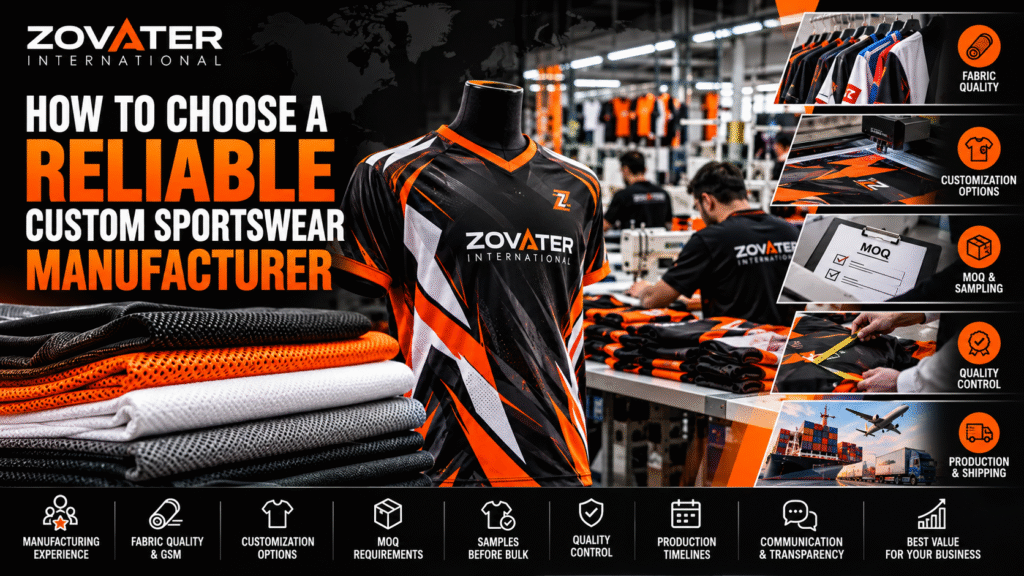
Choosing a reliable custom sportswear manufacturer is an important step for sportswear brands, wholesalers, sports clubs, and private-label businesses. The right manufacturing partner can help you maintain consistent product quality, manage production schedules, and develop customized apparel that meets your customers’ expectations.
Before placing a bulk order, consider these essential factors.
1. Evaluate Manufacturing Experience
A manufacturer should understand the requirements of different sportswear products, including soccer uniforms, basketball jerseys, gym wear, cricket apparel, and training clothing.
When evaluating a potential supplier, ask about their experience with your specific product category, available manufacturing processes, and previous production projects.
2. Check Fabric Quality and GSM
Fabric selection directly affects the comfort, performance, durability, and appearance of sportswear.
Important factors include:
- Fabric Composition: Polyester, cotton, elastane blends, and other performance materials.
- GSM: Fabric weight measured in grams per square meter.
- Breathability: Important for training and high-intensity sports.
- Stretch and Recovery: Essential for fitted and flexible athletic apparel.
- Durability: Fabric should withstand its intended use and repeated washing.
Always request fabric samples and confirm specifications before bulk production.
3. Explore Customization Options
A professional custom sportswear manufacturer should be able to explain which customization methods are suitable for your chosen fabric and design.
Common options include:
- Sublimation printing
- Screen printing
- DTF printing
- Embroidery
- Custom labels and packaging
- Team names and player numbers
For private-label sportswear brands, consistent branding and accurate artwork reproduction are especially important.
4. Understand Minimum Order Quantity (MOQ)
MOQ refers to the minimum number of units a manufacturer accepts for an order.
MOQ requirements may vary depending on product type, material availability, customization complexity, and production setup.
Before ordering, clarify:
- Minimum quantity per design
- Minimum quantity per color
- Size assortment requirements
- Sampling charges
- Price differences between smaller and larger orders
Choosing a supplier with suitable order requirements can help businesses manage inventory and purchasing costs.
5. Request Samples Before Bulk Production
Samples allow buyers to evaluate the proposed product before committing to larger quantities.
Check the following:
- Fabric feel and weight
- Sizing and fit
- Stitching and seam construction
- Print quality and color accuracy
- Logo placement
- Overall finishing
Where necessary, perform wash and wear testing. Confirm that the approved sample specifications will be followed during bulk production.
6. Review Quality Control Standards
Reliable manufacturing requires consistent quality checks throughout production.
Ask potential suppliers how they inspect incoming materials, monitor cutting and stitching, verify printing or embroidery, and assess finished garments.
Discuss acceptable tolerances, inspection procedures, and the process for resolving defective or incorrect products.
7. Confirm Production and Delivery Timelines
Production timelines can vary based on order quantity, material availability, design complexity, and factory capacity.
Before placing an order, confirm:
- Sample development time
- Bulk production lead time
- Artwork and sample approval deadlines
- Shipping arrangements
- Tracking and documentation
- Procedures for handling delays
International buyers should also clarify shipping terms, import responsibilities, and any applicable duties or taxes.
8. Evaluate Communication and Transparency
Clear communication helps prevent costly misunderstandings.
A suitable manufacturing partner should provide understandable quotations, written specifications, realistic timelines, and updates during production.
Make sure responsibilities relating to design approval, payment terms, quality issues, and shipping are agreed upon before production begins.
9. Compare Value, Not Just Price
The lowest quotation is not always the most cost-effective choice.
Evaluate the total value offered, including:
- Product quality
- Material specifications
- Customization accuracy
- Sampling costs
- Production reliability
- Shipping expenses
- After-sales support
A slightly higher price may be worthwhile when it reduces defects, delays, and replacement costs.
10. Ask the Right Questions Before Ordering
Before selecting a custom sportswear manufacturer, ask:
- What sportswear products do you manufacture?
- Which fabrics and GSM options are available?
- Can you provide customized samples?
- What are your MOQ requirements?
- Which printing and embroidery methods do you offer?
- How do you maintain production quality?
- What are your production and shipping lead times?
- How are defective products or order discrepancies handled?
The answers will help you evaluate whether a supplier is suitable for your business.
Conclusion
Choosing a reliable custom sportswear manufacturer requires more than comparing prices. Fabric quality, customization capabilities, sampling, quality control, transparent communication, and dependable production planning are all essential considerations.
Zovater International provides custom sportswear manufacturing solutions for brands, teams, and business buyers looking to develop personalized athletic apparel.
Looking for a custom sportswear manufacturing partner? Contact Zovater International to discuss your product requirements, designs, fabrics, and order quantities.