Choosing the right fabric is one of the most important decisions when developing custom sportswear. Whether you are launching a sportswear brand, supplying team uniforms, or sourcing products in bulk, fabric selection directly affects comfort, durability, performance, and customer satisfaction.
1. Understand Your Sportswear Requirements
Different sports require different fabric properties. For example:
- Soccer Wear: Lightweight, breathable fabrics that help manage moisture.
- Basketball Wear: Flexible, quick-drying fabrics suitable for movement.
- Gym Wear: Stretchable materials that offer comfort and freedom of movement.
- Cricket Wear: Breathable fabrics designed for extended outdoor activity.
- Training Wear: Durable and comfortable fabrics suitable for repeated use.
2. Understand Fabric GSM
GSM stands for Grams per Square Meter. It measures fabric weight, not quality.
Common examples include:
- 90–140 GSM: Lightweight mesh and performance fabrics.
- 140–180 GSM: Lightweight to medium-weight sportswear materials.
- 200–260 GSM: Some training wear, stretch garments, and heavier performance fabrics.
- 300–350 GSM: Certain heavyweight fleece and structured garments.
The ideal GSM depends on the sport, fabric construction, climate, and intended use.
3. Choose the Right Fabric Construction
Different fabric constructions offer different benefits:
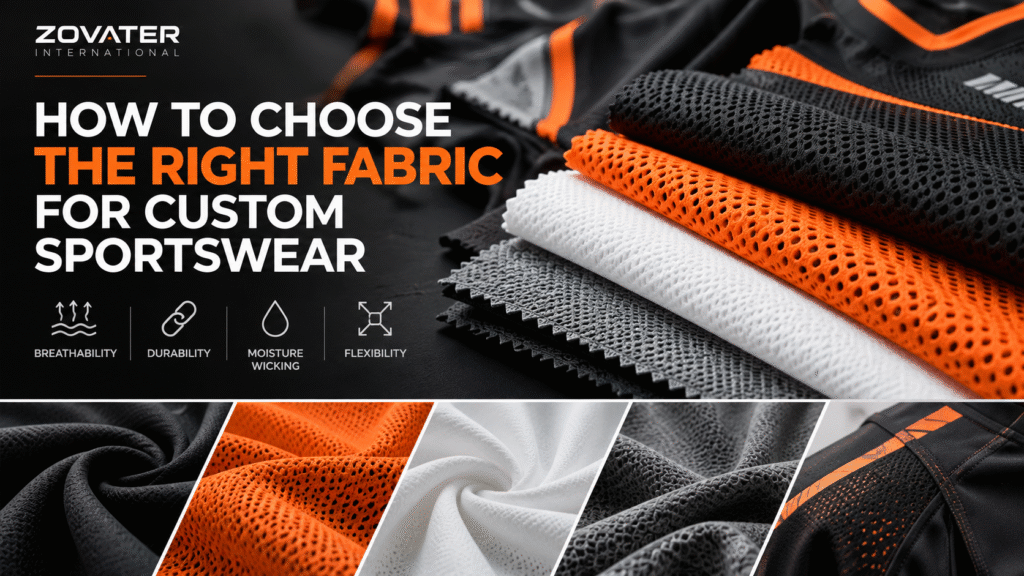
Bird Eye Mesh: Commonly used in breathable sports jerseys and training garments.
Micro Interlock: Offers a smooth surface and is suitable for many types of custom sportswear.
Stretch Interlock: Useful for fitted garments requiring greater flexibility.
Fleece: Commonly used for hoodies, sweatshirts, and warm-up clothing.
4. Consider Customization Options
Before selecting a fabric, consider how your design will be applied.
Common customization methods include:
- Sublimation printing
- Screen printing
- Direct-to-Film (DTF) printing
- Embroidery
Not every fabric is suitable for every printing technique. For example, conventional dye sublimation generally works best on suitable polyester fabrics.
5. Evaluate Quality Before Bulk Production
Before confirming a bulk order, buyers should consider checking:
- Fabric composition and GSM
- Stretch and recovery
- Stitching and seam strength
- Print quality and wash durability
- Fit and size consistency
- Color accuracy
Sampling and testing can help reduce problems during larger production runs.
Conclusion
The right sportswear fabric should balance performance, comfort, appearance, and cost. Understanding fabric construction, weight, and customization compatibility helps brands make better purchasing decisions.
Zovater International provides custom sportswear manufacturing solutions for brands, teams, and business buyers.
Looking for a manufacturing partner for your next custom sportswear collection? Contact Zovater International to discuss your requirements.